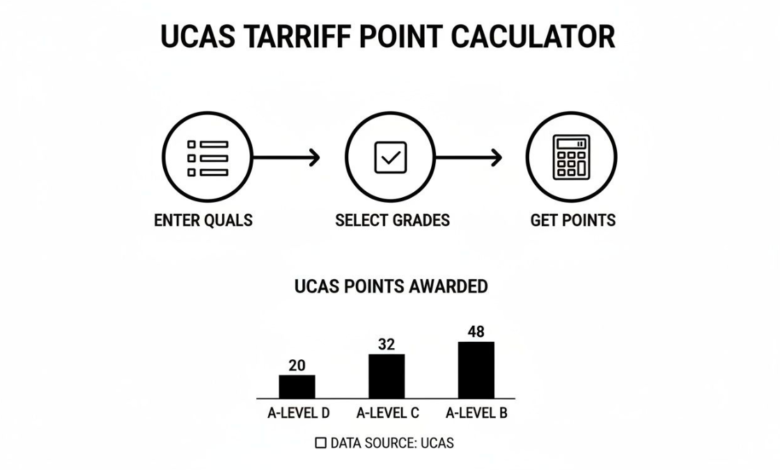
The UCAS points calculator a level is an essential tool for students who want to understand how their academic performance translates into university entry requirements in the UK. It converts A-Level grades into UCAS Tariff points, helping learners quickly estimate their eligibility for different courses. This system is widely used by universities to compare applicants fairly, making it easier for students to plan their future studies with confidence and clarity.
In today’s competitive education system, the UCAS points calculator a level plays an important role in simplifying the application process. Instead of relying only on letter grades, students can see a numerical value that represents their achievement. This makes it easier to compare different qualifications and understand where they stand academically before applying to university, especially when targeting competitive courses or institutions.
What Is the UCAS Tariff System?
The UCAS Tariff system is a structured framework that assigns numerical values to qualifications, including A-Levels, BTECs, and other recognised awards. The UCAS points calculator a level is based on this system and helps students convert their grades into measurable scores. These points are then used by universities to set entry requirements and compare applicants from different educational backgrounds fairly and consistently.
The UCAS Tariff system is not used by every university, but it still plays a major role in many admissions processes. The UCAS points calculator a level allows students to understand how their academic achievements translate into university expectations. This helps learners make informed decisions when choosing courses and ensures they can evaluate multiple options based on their total UCAS Tariff score.
UCAS Points Calculator A Level Grade Conversion Explained
The UCAS points calculator a level follows a simple grade-to-points conversion system. An A* grade is worth 56 points, an A is worth 48 points, a B is worth 40 points, a C is worth 32 points, a D is worth 24 points, and an E is worth 16 points. These values allow students to calculate their total UCAS Tariff score accurately and understand their academic position.
When using the UCAS points calculator a level, most universities consider the best three A-Level subjects. Students add the points from each subject to calculate their total score. This final number is then compared with university entry requirements. Understanding this conversion is essential for students aiming to secure places at competitive universities or courses with high academic standards.
How to Use a UCAS Points Calculator A Level Step by Step
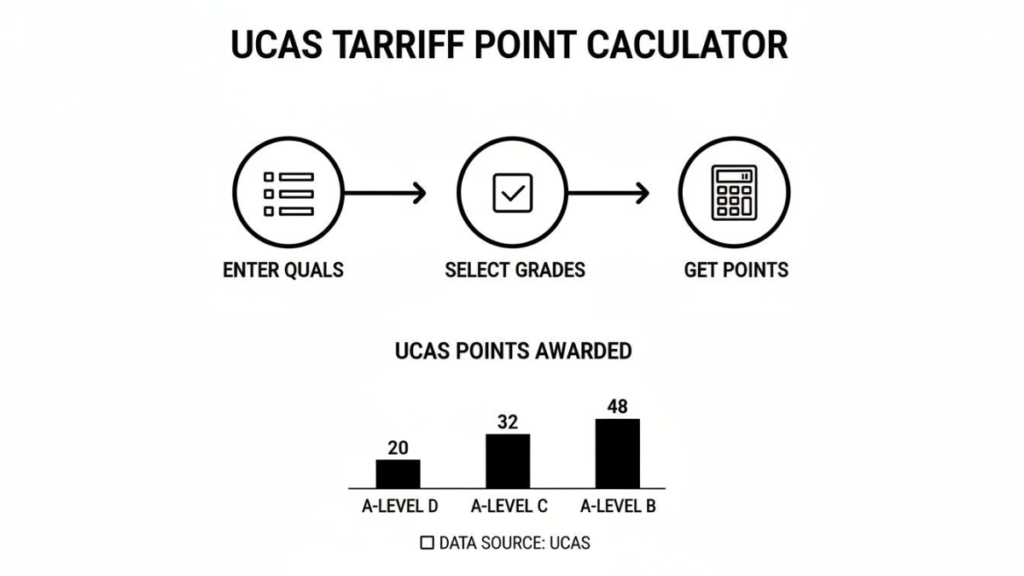
Using a UCAS points calculator a level is straightforward and designed to support students during the application process. First, learners enter their A-Level subjects or other qualifications into the calculator. Next, they input their achieved or predicted grades. The system then automatically converts these grades into UCAS Tariff points using the official grading structure.
Once the calculation is complete, the UCAS points calculator a level provides a total score that students can compare with university entry requirements. This allows them to quickly determine whether they meet the criteria for their chosen course. It also helps students identify whether they need to improve their grades or consider alternative study options before submitting their application.
UCAS Points Requirements for UK Universities
Different universities across the UK have different entry requirements based on UCAS points or grades. The UCAS points calculator a level helps students understand these variations clearly. Competitive courses such as medicine, engineering, or law often require higher UCAS Tariff points, while other courses may have more flexible requirements depending on the institution.
The UCAS points calculator a level is especially useful for comparing offers from multiple universities. Some universities still prefer traditional grade-based offers instead of UCAS points. However, by converting grades into points, students can easily compare different offers and understand which universities match their academic profile and career ambitions.
How Many UCAS Points Do You Need for A Levels?
The number of UCAS points required for university entry varies depending on the course and institution. The UCAS points calculator a level shows that grade combinations such as AAB, ABB, or BBB translate into different total scores. Highly competitive universities often require higher UCAS Tariff points, while others may accept lower combinations depending on the subject area.
Students can also increase their UCAS points total by taking additional qualifications such as the Extended Project Qualification (EPQ). The UCAS points calculator a level helps students experiment with different combinations of grades and subjects to better understand how close they are to meeting their target university requirements and what improvements may be needed.
Factors That Affect Your UCAS Points Total
Several factors influence the final result produced by a UCAS points calculator a level. The most important factor is the number of A-Level subjects a student takes, as each subject contributes additional points. Other qualifications such as BTECs, T Levels, and AS Levels can also significantly impact the total UCAS Tariff score depending on their level and grade.
Predicted grades also play an important role in early university applications. The UCAS points calculator a level allows students to estimate their potential performance and plan accordingly. This helps them set realistic academic goals and make informed decisions about which universities to apply to based on their expected results.
Benefits of Using a UCAS Points Calculator A Level
The UCAS points calculator a level offers several key benefits for students preparing for university. It simplifies the application process by converting complex grade systems into easy-to-understand numerical values. This helps students clearly understand their academic standing and compare it with entry requirements across different universities in the UK.
Another major benefit of the UCAS points calculator a level is that it helps students plan more effectively. By knowing their estimated UCAS Tariff points, learners can set realistic goals and adjust their study strategies. This increases their chances of securing a place at their preferred university and reduces uncertainty during the application process.
UCAS Points Calculator A Level vs Grade-Based Entry Requirements
Some universities use UCAS Tariff points, while others rely strictly on grades for admissions decisions. The UCAS points calculator a level bridges this gap by allowing students to understand both systems easily. It provides a clear numerical representation of academic performance that can be compared across different universities and courses.
Grade-based systems are often simpler, but UCAS Tariff points offer more flexibility when evaluating different qualifications. The UCAS points calculator a level helps students navigate both systems effectively, ensuring they understand exactly what is required for their chosen course and how their results translate into university offers.
Common Mistakes Students Make With UCAS Points
Many students make avoidable mistakes when using a UCAS points calculator a level. One common issue is misunderstanding how AS-Level and A-Level points differ. Another mistake is failing to check whether their chosen university actually uses UCAS Tariff points or prefers grade-based entry requirements instead.
Students may also forget to include additional qualifications such as EPQ or BTEC, which can significantly affect their total score. The UCAS points calculator a level helps reduce these errors by providing a structured and accurate way to calculate UCAS Tariff points, ensuring students make informed decisions during their application journey.
Tips to Maximise Your UCAS Points for University Entry
To maximise UCAS points, students should carefully choose A-Level subjects that align with their strengths and university goals. The UCAS points calculator a level can help them explore different combinations and understand which subjects provide the best outcomes for their desired courses and career paths.
Improving predicted grades and completing additional qualifications like EPQ can also significantly increase total UCAS Tariff points. Using the UCAS points calculator a level regularly allows students to track progress and adjust their study plans, helping them stay focused and improve their chances of securing a university place.
Conclusion
The UCAS points calculator a level is an essential tool for any student planning to apply to UK universities. It simplifies the process of converting grades into UCAS Tariff points and provides a clear understanding of academic performance. By using it effectively, students can make smarter decisions, compare universities easily, and improve their chances of admission.
Frequently Asked Questions
What is a UCAS Points Calculator A Level used for?
It is used to convert A-Level grades into UCAS Tariff points for university applications and eligibility checks.
How many UCAS points is an A* worth at A-Level?
An A* grade is worth 56 UCAS points according to the official UCAS Tariff system.
Do all universities use UCAS Tariff points?
No, some universities use grades only, while others use UCAS points for admissions.
Can I calculate UCAS points from predicted grades?
Yes, the UCAS points calculator a level allows calculations using predicted grades as well.
How many UCAS points do I need for university admission?
It depends on the course and university requirements, which vary widely across institutions.
Do BTECs count towards UCAS Tariff points?
Yes, many BTEC qualifications are included in the UCAS Tariff system.
Does EPQ increase UCAS points?
Yes, EPQ can add extra UCAS points depending on the grade achieved.
What is the difference between UCAS points and grades?
Grades are letter-based results, while UCAS points are numerical values used for comparison.
Also Read: Top 10 Best Greek Islands