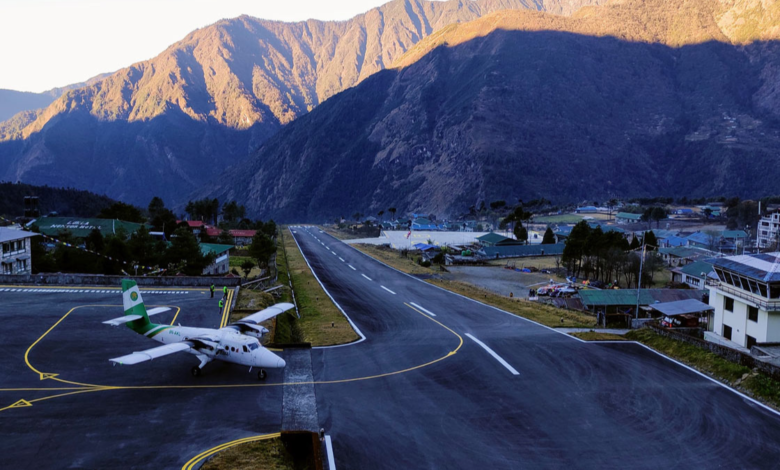
Lukla Airport, officially known as Tenzing-Hillary Airport, is one of the most famous mountain airports in the world and a vital gateway to the Everest region. Located in Nepal, lukla airport is surrounded by towering Himalayan peaks, deep valleys, and unpredictable weather systems that make aviation operations extremely challenging. It is widely recognised as the starting point for trekkers heading towards Everest Base Camp, giving it global importance in adventure tourism.
Lukla airport has gained international attention not only for its scenic surroundings but also for its extreme operational difficulty. Due to its location in a remote mountainous region, it serves as a lifeline for local communities and tourists. However, lukla airport is also known for its high-risk landings and take-offs, which require exceptional piloting skills and careful planning before every flight.
Where is Lukla Airport Located?
Lukla airport is situated in the Khumbu region of eastern Nepal within the Solukhumbu District, close to the world’s highest mountain, Mount Everest. This remote location makes it accessible mainly through short flights from Kathmandu, as road access is extremely limited and challenging. The surrounding landscape is dominated by rugged Himalayan terrain, which adds to the airport’s dramatic and isolated setting.
Because of its unique geographical position, lukla airport plays a crucial role in connecting remote mountain settlements with the rest of Nepal. The airport acts as the primary entry point for trekkers and climbers. However, its location also contributes to operational difficulties, as weather patterns can change rapidly, and strong winds often disrupt flight schedules, making reliability a constant challenge.
Lukla Airport Altitude and Elevation Facts
Lukla airport is built at an altitude of approximately 2,846 metres (9,334 feet) above sea level, making it one of the highest airports in the world. This high elevation significantly affects aircraft performance, as the thin air reduces engine power and aerodynamic lift. Pilots must carefully adjust their approach strategies when operating at lukla airport due to these physical limitations.
The elevation of lukla airport also creates additional pressure on aviation operations. Aircraft require more precise control during take-off and landing because of the reduced air density. Passengers may also feel the effects of altitude, such as mild breathlessness. Combined with unpredictable Himalayan weather, the elevation makes lukla airport one of the most technically demanding airports for aviation professionals.
Lukla Airport Runway Length and Cliffside Design
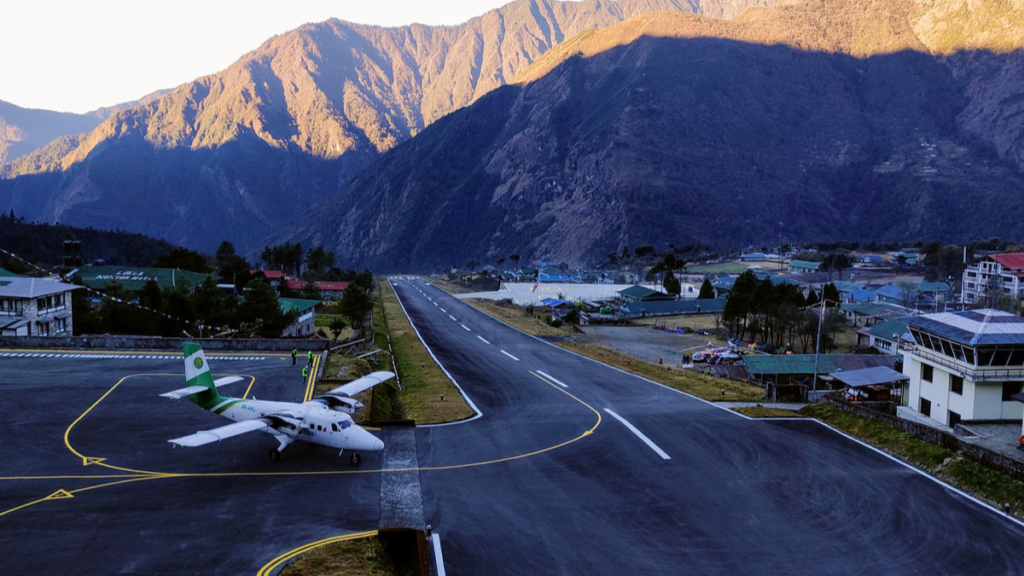
The runway at lukla airport is approximately 527 metres long, making it extremely short compared to standard international airports. Its design includes a steep uphill gradient on one side and a dramatic cliff drop on the other. This unique structure was created due to the lack of flat land in the Himalayan region, leaving no alternative but to build within the natural terrain.
This cliffside runway design makes lukla airport especially dangerous during landing and take-off procedures. Pilots must land uphill to slow down the aircraft quickly, while take-off is done downhill to gain speed. Any miscalculation can be critical, which is why only highly trained pilots are permitted to operate at lukla airport. The runway remains one of the most iconic yet intimidating in global aviation.
Lukla Airport Landing Experience
Landing at lukla airport is considered one of the most intense aviation experiences in the world. The approach requires flying through narrow mountain valleys surrounded by steep cliffs and unpredictable wind currents. Pilots must maintain absolute precision while aligning the aircraft with the short runway, leaving very little margin for error during final descent.
For passengers, landing at lukla airport is both thrilling and nerve-wracking. The sudden visual of the steep runway and surrounding cliffs creates a dramatic impression. Weather conditions such as fog, wind shear, and sudden cloud cover further increase difficulty. Every landing at lukla airport depends heavily on pilot skill, timing, and real-time weather judgement, making it a truly unique aviation experience.
Lukla Airport Flights and Airlines
Flights to lukla airport typically operate from Kathmandu and are among the shortest yet most challenging commercial routes in Nepal. These flights are usually scheduled early in the morning when weather conditions are relatively stable. Small aircraft designed for short take-off and landing operations are used due to the airport’s limited runway length.
Airlines operating to lukla airport must follow strict safety standards and rely heavily on experienced pilots familiar with mountain flying conditions. Flights are often delayed or cancelled due to sudden weather changes, which is common in the Himalayan region. Despite these challenges, lukla airport remains a busy hub during trekking seasons, supporting thousands of travellers each year.
Lukla Airport Weather Conditions and Webcam Monitoring
Weather conditions at lukla airport are highly unpredictable and can change within minutes. Strong winds, dense fog, and sudden snowfall frequently disrupt flight operations. These extreme conditions are one of the main reasons why lukla airport is considered so dangerous and why flight schedules are often uncertain.
To manage this uncertainty, many travellers and operators rely on lukla airport webcam systems and weather updates. These real-time monitoring tools help assess visibility and wind conditions before flights are cleared. Despite technological improvements, weather remains the most uncontrollable factor affecting operations at lukla airport, making it a constant challenge for aviation safety.
Lukla Airport Crashes and Safety History
Over the years, lukla airport has witnessed several aviation incidents due to its difficult terrain and unpredictable environment. The combination of short runway length, high altitude, and sudden weather changes has contributed to past accidents. These incidents have reinforced the airport’s reputation as one of the most dangerous in the world.
However, aviation authorities in Nepal have introduced stricter safety measures to reduce risks at lukla airport. Only experienced pilots with specialised training are allowed to operate flights, and aircraft undergo rigorous maintenance checks. While improvements have been made, the natural environment continues to pose inherent risks that cannot be fully eliminated.
Lukla Airport Code and Technical Information
The official airport code for lukla airport is LUA, and it is officially known as Tenzing-Hillary Airport in honour of the first successful Everest climbers. The airport is owned and operated by the Government of Nepal and serves as a critical aviation hub for the Everest region.
Due to its unique location, lukla airport is limited to small aircraft capable of short take-off and landing operations. Its infrastructure is minimal compared to international airports, reflecting the constraints of its mountainous environment. Despite these limitations, lukla airport remains an essential link between remote Himalayan communities and the rest of Nepal.
Why Lukla Airport is Called the Most Dangerous Airport
Lukla airport has earned its global reputation due to a combination of extreme altitude, short runway length, steep cliffside design, and unpredictable weather conditions. These factors collectively create one of the most challenging flying environments in the world, requiring exceptional precision and experience from pilots.
Despite its dangers, lukla airport continues to operate as a vital gateway for Everest tourism and local transportation. Its reputation attracts global curiosity, making it both a feared and admired destination in aviation history. The airport stands as a symbol of human determination to operate in one of the harshest natural environments on Earth.
Conclusion
Lukla airport is not just an airport; it is an extraordinary example of aviation operating at the edge of human and environmental limits. Surrounded by the Himalayas and exposed to unpredictable conditions, it continues to challenge pilots while serving as a lifeline for thousands of travellers and local residents each year.
Even with its risks, lukla airport remains essential for Everest expeditions and Nepal’s tourism economy. Its unique combination of danger, beauty, and engineering brilliance ensures that it will always hold a legendary status in global aviation history, making it one of the most remarkable airports in the world.
Frequently Asked Questions
What is Lukla airport?
Lukla airport is a high-altitude mountain airport in Nepal serving Everest trekking routes.
Where is Lukla airport located?
It is located in the Khumbu region of Nepal near Mount Everest.
What is the altitude of Lukla airport?
Lukla airport is about 2,846 metres above sea level.
Why is Lukla airport dangerous?
Because of its short runway, cliffside location, and unpredictable weather conditions.
What is the runway length of Lukla airport?
The runway is approximately 527 metres long.
What is the airport code for Lukla airport?
The airport code is LUA.
Are flights to Lukla airport safe?
Flights are operated by trained pilots, but conditions remain highly challenging and weather-dependent.
Also Read: Ed Stoppard